I love reusable menstrual products. There, I’ve said it. I find them more comfortable, effective, easier to use, and capable of reducing a staggering amount of landfill waste that comes with disposable pads and tampons. I’ve calculated in the approximate seven years that I have been exclusively using my menstrual cup and cloth pads, I have saved over 2,300 disposable pads and tampons from landfill. That’s just me. Imagine what we could achieve if more made the change!

I first heard about reusable menstrual products from a friend in 2013 when she happened to raise the topic. She was quite enthusiastic about them and gave me the name of the brand she used; Scarlet Eve. I didn’t quite ‘get it’ at the time. I thought it was an unusual thing to be so passionate about, but I was definitely intrigued, so I went on to purchase a menstrual cup and a few cloth pads.
I spent around 3 years using them here and there, when I felt like it, in between using my regular disposable products. Once I realised the power these products held to reduce landfill waste, I committed to never purchasing again disposable options. I haven’t looked back.
There is a little bit of learning and unlearning that comes with switching from disposable to reusable. It took me time to gain confidence with using the cup and get into a comfortable routine with washing the pads, but it doesn’t take long to get used to it.
Menstrual Cup
It’s not a difficult learning, but you do need to learn how to correctly insert and carefully remove the cup, for comfort and for function! It does take a few uses or even cycles to get completely comfortable and confident. And that’s ok! When inserted correctly into the vagina, you cannot feel a thing and they cope with more blood than a tampon can, so you can safely leave it in for longer. Super convenient! When you purchase a cup, it will come with clear instructions, but essentially you fold them in on themself to insert and rotate slowly as you insert so it opens up.
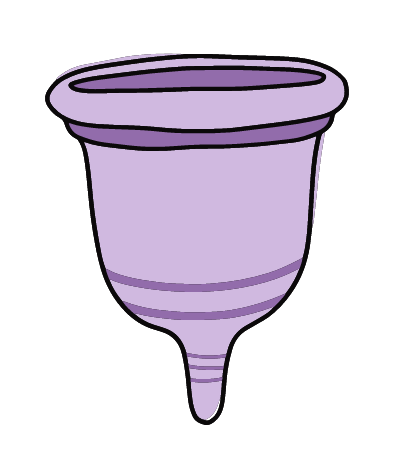
If you are not familiar with menstrual cups, here is a link to the menstrual cup I have, but there are lots of options out there. After a few goes, you’ll learn how often you need to empty and reinsert your cup. It’s very individual. I’m heavy in my first three days and in those days, I insert it early in the morning and like to empty it around lunchtime and dinnertime. Then I remove it before bed and use a cloth pad overnight. On the remaining lighter days, I may use cloth pads only, or I may use the cup here and there, depending on what I’m doing.
Are there any cons that come with mentrual cups?
The cons I have for menstrual cups are minor and few. If the cup is not inserted correctly, it can sit too low and be a little uncomfortable (although I have found it usually corrects itself after a while). If the cup is not inserted correctly such that it remains folded, it doesn’t catch the blood effectively and some travels around it through to your pad (I always wear a back up pad anyway because I’m on the heavier side of blood loss and I’d recommend you do the same until you gain confidence with your cup). And, a cup of blood is always going to present a spill risk from the moment you remove it is safely emptied, so you do need to take care when removing the cup. I find if you are paying attention to what you are doing and being careful, you can control this risk! I wouldn’t call the cleaning and sterilising a con. Any product used will require some kind of management (think: tampons require purchasing, ensuring you always have enough with you, and a bin to dispose them in). As the cup only requires 4 min in boiling water to sterilise each day, it’s negligible in my mind when you consider the time required to purchase, pack, unwrap, and dispose of tampons. Not to mention the cost!
How do I clean and sterilise my cup?
If I’m out and about, i just make sure I have clean hands to empty and reinsert my cup and do it so it does not touch any surface at all. I tip the contents into the toilet and flush. If I’m in the comfort of my own home, I give it a quick rinse with tap water between emptying and reinserting. Then I rinse it at the end of the day and boil it for 4 min to sterilise either that night or the next morning before using it again. This is what works for me and you will find a routine that works for you. At the end of use for each cycle, I sterilise it and keep it in a clean, fabric pouch until next month.
I love that once you have the cup in, you are set for the day. You don’t need to take anything with you!
Cloth Pads
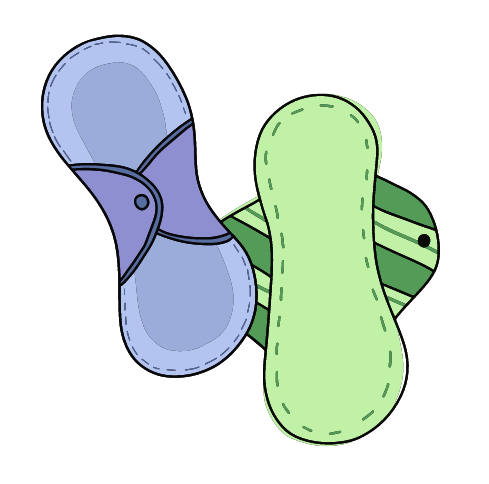
I love my cloth pads. They are more comfortable than disposable pads and there is no awful crinkly sound of the plastic that comes with the latter. I have personally found that cloth pads generate less odour than disposable pads, perhaps because they are more absorbent and breathable.
How many pads will I need?
It took a few cycles for me to figure out what size pads and how many of each I need in my collection and this will vary from person to person. I’d recommend start with a small set as you start out, then complete your set once you know what you need. I have three large ‘uber’ pads for the first three nights, around eight regular pads and a few lighter pads that can be used as liners, which can cope with a little bit of blood.
How do I wash my cloth pads?
Good suppliers of cloth pads with come with clear washing and care instructions. Typically the used pad is placed face-down in a bucket of cold water. It can sit like this until you’re ready to do a load of cold washing (noting it’s generally good to change the water each day if they need to sit there for a few days). I would have classed the blood in a bucket and handling cloth pads in the laundry and hanging on the line a negative in the early days. I felt a little embarrassed about it and I had to remember to hide the buckets away if someone was over. Now I really don’t care. My family and I are used to it and I usually remember to move any ‘moon buckets’ out of sight before visitors come over.
Most of the blood comes out in the bucket soak, after which it can go in a cold wash on a regular cycle and hung on the line. Mine can go in the dryer, but I try to avoid that and mostly completely dry on the line.
How long do cloth pads last?
I’ve only ever used the Scarlet Eve brand so I can only comment on them. These have lasted me years. I’ve only had to replace a small number (maybe 5 or 6) in the last 10 years. Some are starting to look a little weary around the edges now (although are fully functional), so I am expecting to need to replace a few more in the coming couple of years. They are very well made.
What about cons for cloth pads?
Cons include washing them, but it just becomes habit and part of your routine. I don’t think about it anymore. I’ve sorted my collection so I only need to wash 2-3 times during my cycle and I just put them in with other washing and pop straight on the line. I try to use my cup as much as possible on heavier days to minimise pad use. If you’re travelling, you would just need to make sure you can soak, wash, and dry as needed and this has been fine for all of my holidays, but I can see how this could be tricky in some situations.
Have I convinced you yet?
I hope this has helped give some more information on using reusable menstrual products and it has convinced you to make the change as part of your zero waste life! Yes, it is a change and you have to clean and sterilise the cup and wash the pads and you have to put in for the start up cost, but I promise that you can successfully adjust to them and once you do, you will never go back! Buying a cup and start up set of pads pay themselves off within about two years and it is awesome to no longer have to go to the shops to buy disposable pads and tampons!
 Change to Zero